

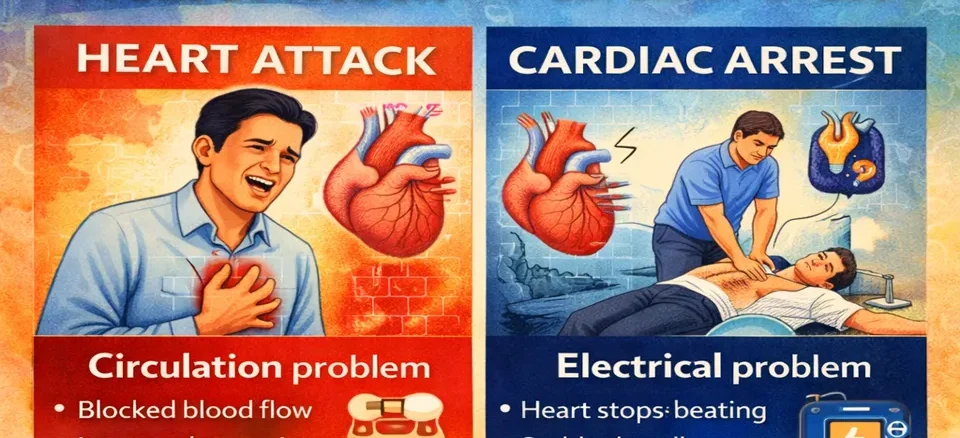
Heart disease is flagged as one of the leading causes of death globally. Every second matters when it comes to heart-related emergencies. But many of us still confuse two of the most serious conditions: heart attack and cardiac arrest.
While they may sound similar, they are not the same. A heart attack is a circulation problem, happens when blood flow to the heart is blocked. Cardiac arrest happens when the heart suddenly stops beating because of a problem with its electrical system. The treatment, first aid, and outcome for each are very different. That’s why it’s important to know the difference between a heart attack and cardiac arrest.
This blog will help you understand what each condition means, how to spot the warning signs, what causes them, and what to do in an emergency. We’ll also talk about which is more dangerous: a heart attack or cardiac arrest, and how you can reduce your risk with simple lifestyle changes.
Synopsis
- Why This Matters?
- What is a Heart Attack?
- Common Signs of a Heart Attack:
- What is Cardiac Arrest?
- Signs of Cardiac Arrest
- Heart Attack Vs Cardiac Arrest
- Can a Heart Attack Lead to Cardiac Arrest?
- First Aid Treatment for Heart Attack
- First Aid for Cardiac Arrest
- Heart Attack or Cardiac Arrest- Which is more dangerous?
- What Puts You at Risk?
- How Can You Prevent Them?
- Conclusion
Why This Matters?
Imagine someone near you collapses suddenly. Would you know what to do? Recognising the signs and understanding the condition can make all the difference. Prompt action can improve survival, especially when every second counts. Let’s break this down clearly and simply.
Leave feedback about this