

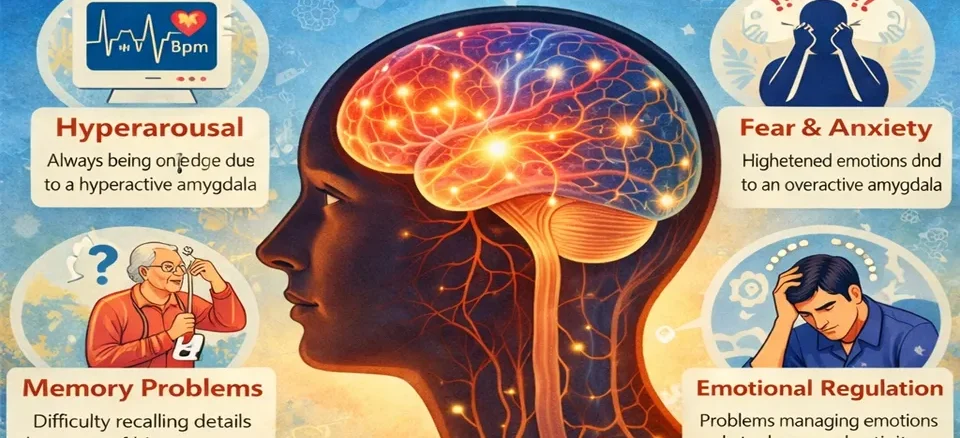
Trauma is a deeply distressing experience that can leave lasting scars, not just emotionally but also physically, particularly on the brain. The complex interplay between traumatic events and brain function can significantly influence an individual’s mental health, behavior, and overall well-being. Understanding how trauma impacts the brain is crucial for fostering empathy, providing effective treatment, and supporting recovery.
The Brain’s Response to Trauma
I am Dr. Sagnik Mukherjee, the best neuropsychiatrist in Kolkata. Let me tell you more about trauma.
When a person experiences trauma, the brain activates its survival mechanisms, often referred to as the freeze, fight-or-flight response. This trauma response is orchestrated by the amygdala, a small, almond-shaped structure in the brain that processes emotions and detects threats. The amygdala sends distress signals to the hypothalamus, which in turn triggers the release of stress hormones like cortisol and adrenaline. These hormones prepare the body to respond to danger but can have harmful effects when released in large quantities over extended periods.
Key Brain Regions Affected by Trauma
- Amygdala: As the brain’s fear center, the amygdala becomes hyperactive in response to trauma, leading to heightened anxiety, hypervigilance, and an exaggerated startle response. This hyperactivity can make it difficult for individuals to regulate their emotions and respond to stressors in a balanced way.
- Hippocampus: The hippocampus, responsible for forming new memories and connecting emotions to these memories, can shrink due to prolonged exposure to stress hormones. This shrinkage impairs memory formation and can lead to difficulties in distinguishing between past and present experiences, causing flashbacks to childhood trauma and intrusive memories common in conditions like PTSD.
- Prefrontal Cortex: The prefrontal cortex, which governs executive functions such as decision-making, impulse control, and emotional regulation, can also be affected by trauma. Stress hormones can weaken this region, leading to problems with concentration, impulsivity, and difficulty in managing emotions.
Long-Term Consequences of Trauma
The long-term consequences of trauma on the brain can manifest in various ways, including:
- Post-Traumatic Stress Disorder (PTSD): Characterized by intrusive memories, nightmares, and severe anxiety, PTSD reflects the enduring impact of trauma on the brain.
- Anxiety and Depression: Chronic exposure to stress hormones can alter brain chemistry, increasing the risk of anxiety disorders and depression.
- Cognitive Impairments: Trauma can lead to difficulties with attention, memory, and problem-solving, impacting academic and professional performance.
- Substance Abuse: Individuals may turn to drugs or alcohol as coping mechanisms, further complicating mental health and brain function.
Leave feedback about this